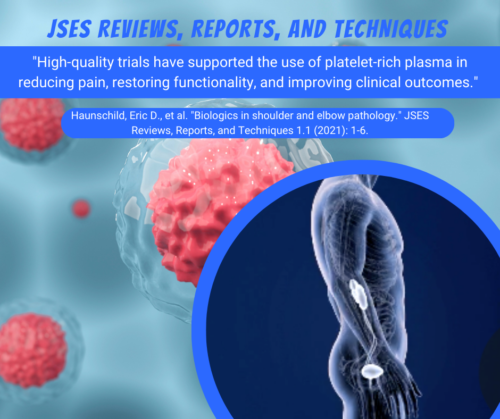
Pain is a feeling of distress, suffering, or agony caused by the stimulation of specialized nerve endings in the body, resulting from injury or disease. Musculoskeletal pain affects the muscles, ligaments, tendons, and bones. When a person suffers from musculoskeletal pain, their quality of life is reduced, and they seek treatment options for chronic pain management.
As a person ages, musculoskeletal diseases increase in frequency. Millions of Americans suffer from arthritis, a chronic musculoskeletal disease that often leads to joint replacements.
Chronic pain is pain that continues or recurs over a prolonged period. Chronic pain, however, can range from mild to severe and last weeks, months, or longer. “Chronic pain is a global health issue affecting millions of people, and conventional treatment modalities have provided only temporary and incomplete pain relief.” (1)
Another type of pain is acute pain. Acute pain is intense and can last a few seconds to hours or days. This severe pain should wane as the injury or disease heals.
Pain often signals that tissues are being damaged. There are different reasons for musculoskeletal pain. Soft tissues, such as muscles, tendons, and ligaments, can be damaged by wear and tear from various activities.
Trauma from falls, accidents, sprains, dislocations, and fractures can also damage musculoskeletal tissue. Musculoskeletal pain can be caused by any trauma to the muscles, ligaments, tendons, bones, and other soft tissue of the joint.
Very often, the pain in a joint is due to ligament and/or tendon injury. Ligaments and tendons are the main connective tissue structures that stabilize and move joints. Unfortunately, these soft tissue structures have a poor blood supply and often fail to heal completely once injured.
That is why an old injury sets into motion a chronic cycle that can rear its head up years later. Ligament tears and injuries alter joint mechanics. They cause the joint to move abnormally. An injured area remains weak. Month after month, and year after year, that weakened joint, moving abnormally, causes joint degeneration.
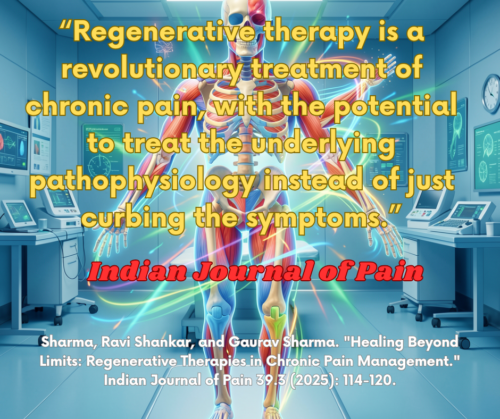
Regenerative Orthopedics, including Prolotherapy, PRP, and Stem Cell Therapy, effectively repairs the damaged, weakened ligaments and tendons. These treatments build stronger tendons and ligaments that can stabilize the joint structures. With treatment, the weakened soft tissue is healed, and the patient’s pain is reduced or eliminated.
“Regenerative therapy is a revolutionary treatment of chronic pain, with the potential to treat the underlying pathophysiology instead of just curbing the symptoms.” (1)
Regenerative Orthopedics significantly relieves chronic musculoskeletal pain in the neck, back, knees, elbows, feet, hands, shoulders, and wrists. The use of Regenerative Orthopedics results in reduced pain and increased function.
These regenerative therapies are effective for arthritis, ligament injury, tendinopathy, joint instability, labral or meniscal injury, joint hypermobility syndrome, and many other musculoskeletal pain conditions.
Regenerative Orthopedics are viable alternatives to pain medications, NSAIDs, cortisone (steroid) injections, and surgery.
Musculoskeletal diseases are prevalent causes of pain and have devastating consequences for millions. Non-Surgical Regenerative Orthopedics are effective treatment options that do not just manage pain but effectively repair the underlying source of the pain…the ligament and tendon injuries.
Many patients come to us tired of ‘managing’ their chronic pain with NSAIDs, narcotic medications, various therapies, and exercises that fail to provide relief. That’s because they do not get to the root of the problem.
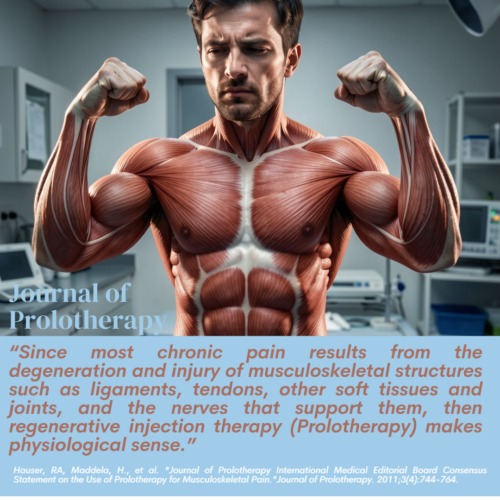
The Journal of Prolotherapy says, “Clinicians make their recommendations to patients on the basis of their knowledge of human physiology in both health and disease. Since most chronic pain results from the degeneration and injury of musculoskeletal structures such as ligaments, tendons, other soft tissues, and joints, as well as the nerves that support them, regenerative injection therapy (Prolotherapy) makes physiological sense. Prolotherapy should be one of the preferred therapies when clinicians, including doctors, nurses, and other allied health care professionals, discuss treatment options with patients who suffer from musculoskeletal pain.”(3)
Do you suffer from musculoskeletal pain, such as chronic knee pain? Shoulder pain? Neck pain? Elbow pain? If you are afflicted with chronic musculoskeletal pain, Regenerative Orthopedics may be your answer. Contact us for a consultation to determine whether you are a candidate or to get a second opinion on a recommended surgery. At OrthoRegen®, we want to help you achieve your goals of optimal health and sustained wellness. We will use the most effective and least invasive methods in your treatment. Don’t just manage your pain; repair it with Regenerative Orthopedics. Call today at 310-453-1234.
(1) Saramantos, Antonios, et al. “Clinical efficacy of prolotherapy for temporomandibular joint disorders: a systematic review and meta-analysis.” Clinics and Practice 15.3 (2025): 51.
(2) Haunschild, Eric D., et al. “Biologics in shoulder and elbow pathology.” JSES Reviews, Reports, and Techniques 1.1 (2021): 1-6.
(3) Hauser, RA, Maddela, H., et al. “Journal of Prolotherapy International Medical Editorial Board Consensus Statement on the Use of Prolotherapy for Musculoskeletal Pain.”Journal of Prolotherapy. 2011;3(4):744-764.